

Cinematic Cubism: A Journey Through My Pocket Movie Stars Sketchbook
There’s something almost magical about carrying an entire galaxy of Hollywood stars in your pocket. My latest artistic adventure has been filling an 8.9 x 14 cm sketchbook with vibrant, cubist-inspired caricatures of cinema’s most iconic faces. What began as a simple creative exercise transformed into a delightful hobby that I’m thrilled to finally share with you all.
The Genesis of the Project
It started during a rainy weekend when I found myself scrolling through Pinterest, captivated by various artistic interpretations of celebrities. I came across a series of stunning cubist-style caricatures that immediately caught my eye. Instead of creating original artwork, I decided to challenge myself by recreating these fascinating interpretations in my own sketchbook.
Armed with a set of alcohol markers, a tiny sketchbook, and an endless supply of coffee, I embarked on what would become a two-years journey of reproducing these artistic tributes to cinema history. The compact size of the sketchbook (just 8.9 x 14 cm) made the copying process an interesting challenge, requiring careful attention to detail despite the limited space.
The Artistic Approach
My goal wasn’t to create original artwork but to faithfully reproduce the geometric interpretations I found online. It became a meditative practice—studying how other artists had captured Jack Nicholson’s devilish eyebrows or Daniel Craig’s cool sophistication through fragmented shapes and bold colors.
The alcohol markers were perfect for recreating these designs. Their vibrant colors allowed me to match the bold hues of the original artwork, while their quick-drying nature made the copying process efficient and enjoyable. There was no pressure to be creatively groundbreaking—just the simple pleasure of seeing these interpretations take shape under my hand.
Technical Challenges and Discoveries
Working at such a small scale (8.9 x 14 cm) while copying detailed artwork presented unique challenges. Each line had to be carefully reproduced, and the alcohol markers required thoughtful application to avoid bleeding through the paper. I developed a technique of working alternating alcohol, water and acrylic markers to prevent color transfer.
As I progressed through the sketchbook, my copying skills improved significantly. What began as a somewhat mechanical process became more fluid as I gained confidence. I started to understand the logic behind the original artists’ color choices—how they used cool blues for Benedict Cumberbatch or earthy warmth for Morgan Freeman.
A Gallery of Cinematic History
As the pages filled with these replicated portraits, my sketchbook became a curated collection of others’ artistic visions. From classical interpretations of Brando to quirky renditions of Owen Wilson, from bold depictions of Sigourney Weaver to complex representations of Joaquin Phoenix.
Each copied portrait connected me not just to the actors themselves but to the anonymous artists whose work I was reproducing. There was something humbling about this process—recognizing the creativity of others while improving my own technical skills through imitation, a time-honored tradition in artistic development.
Schwarzenegger Meets Stallone
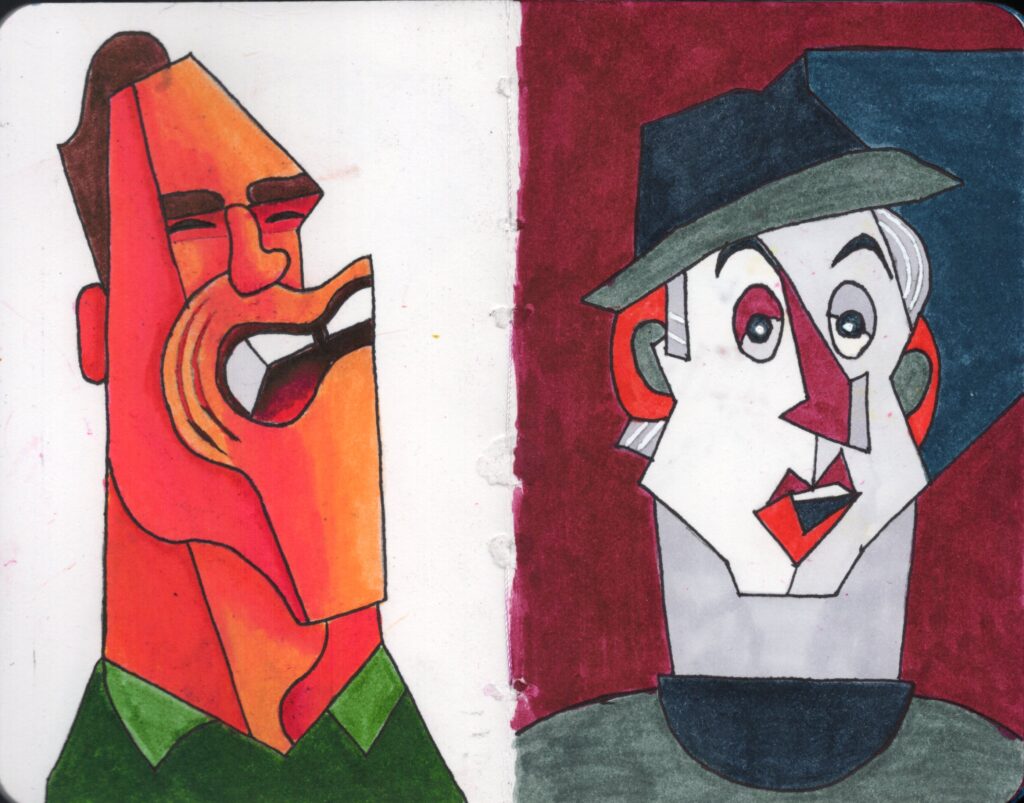
One of my favorite early spreads in the sketchbook features reproductions of Arnold Schwarzenegger and Sylvester Stallone illustrations I discovered during my Pinterest explorations. The original artist had captured Schwarzenegger’s distinctive angular features using vibrant red and orange tones that gave the portrait an energetic, almost aggressive quality. Copying the strong lines and bold colors that represented the star of “Terminator” and “Predator” was both challenging and satisfying.
On the facing page, the Stallone illustration I reproduced showcased a more geometric approach with a striking white face against a deep burgundy background. The original artist had cleverly incorporated his characteristic intense gaze and strong jawline through simplified shapes. The contrast between the green hat and the stylized facial features created a dynamic portrait of the “Rocky” and “Rambo” icon that was particularly enjoyable to recreate with my alcohol markers.
Keaton and Allen
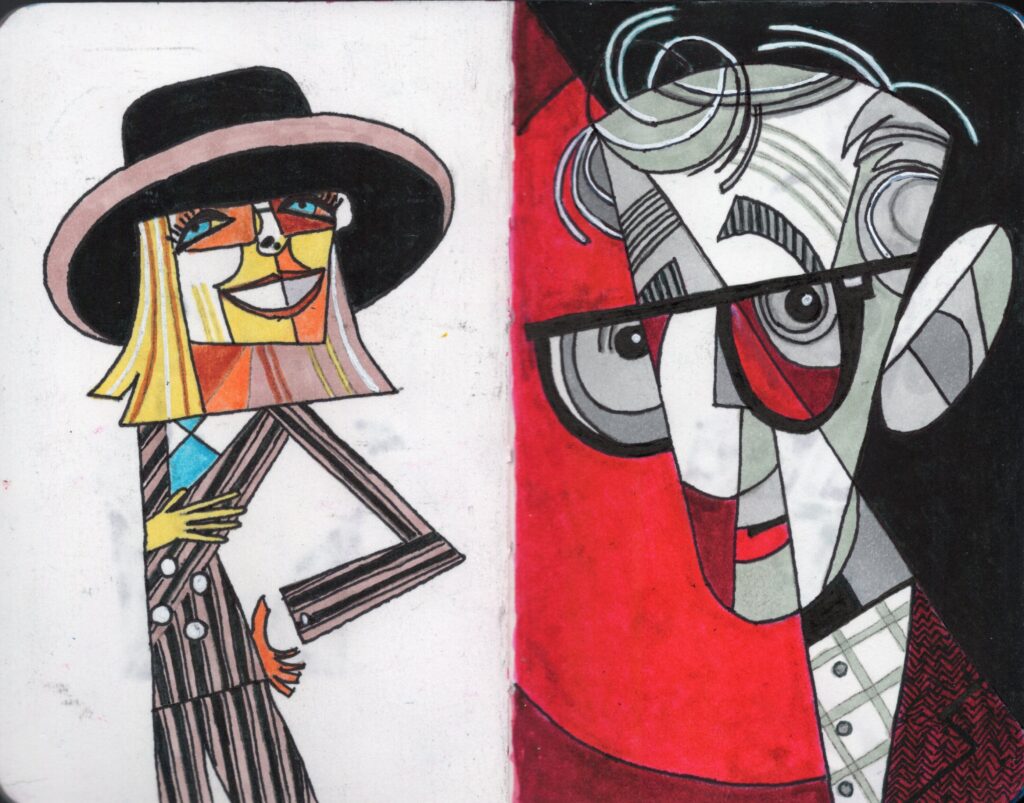
The Diane Keaton and Woody Allen double page featured two distinctly different styles that made copying them particularly interesting. For the Keaton illustration, the original artist had used a cubist approach with fragmented shapes in warm yellows and oranges, topped with her signature hat. The playful geometric style perfectly captured the quirky charm of the “Annie Hall” star. Reproducing the precise angles and color transitions was a delightful challenge.
Across the page, the Woody Allen caricature I copied featured his iconic thick-rimmed glasses and nervous expression rendered in a more monochromatic palette. The original artist had distilled his neurotic persona into simple lines and shapes, creating an instantly recognizable portrait of the director of “Manhattan” and “Midnight in Paris.” Replicating the subtle gradations and distinctive facial features in my small sketchbook required careful attention to detail.
Hollywood Legends
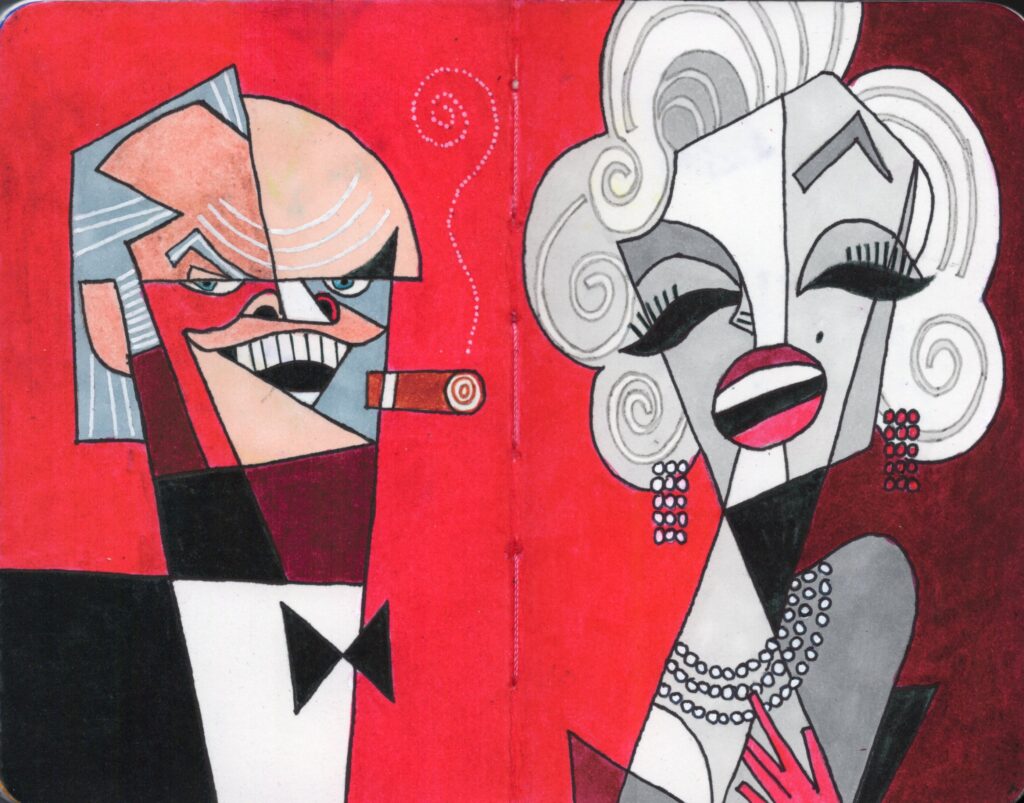
The Jack Nicholson and Marilyn Monroe double page features two of cinema’s most iconic faces, brilliantly reimagined by the original artists. The Nicholson illustration I copied uses jagged geometric shapes in cool blues and whites to capture his devilish eyebrows and unmistakable smile. The fragmented style perfectly conveys the manic energy he brought to films like “The Shining” and the charm of “As Good As It Gets.” Reproducing the precise angles and intense expression was a fascinating exercise in precision.
For Monroe, the original artist had taken a completely different approach, using flowing curves and warm colors to represent her sensual presence. The swirling, undulating lines of her blonde hair contrast beautifully with the more structured facial elements. Copying this interpretation of the star of “Some Like It Hot” and “Gentlemen Prefer Blondes” was a study in contrasts—from rigid geometric shapes to fluid, organic forms. The original artist had managed to capture both her glamorous public image and hint at her vulnerability.
Method and Madness
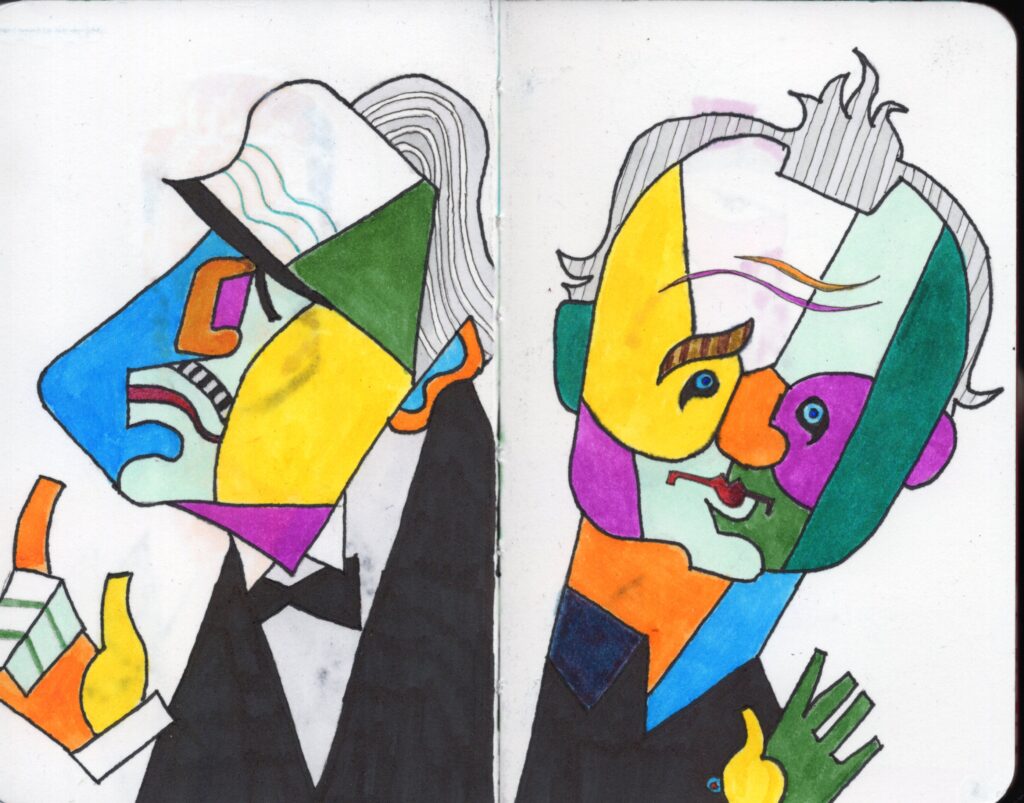
Reproducing the Marlon Brando and Bill Murray illustrations side by side created a fascinating visual dialogue between two transformative actors from different eras. The Brando caricature I copied featured substantial, weighty shapes in muted tones—perfectly capturing the gravitas he brought to roles in “The Godfather” and “On the Waterfront.” The original artist had brilliantly distilled his brooding intensity into a series of interconnected geometric forms.
The Bill Murray illustration on the facing page used a more playful approach with unexpected color transitions and looser lines, reflecting his deadpan absurdity in films like “Ghostbusters” and “Lost in Translation.” The original artist had created a perfect visual representation of Murray’s ability to be simultaneously sardonic and soulful. Copying these contrasting styles in my small sketchbook helped me appreciate the different artistic approaches to capturing personality.
Character and Charisma
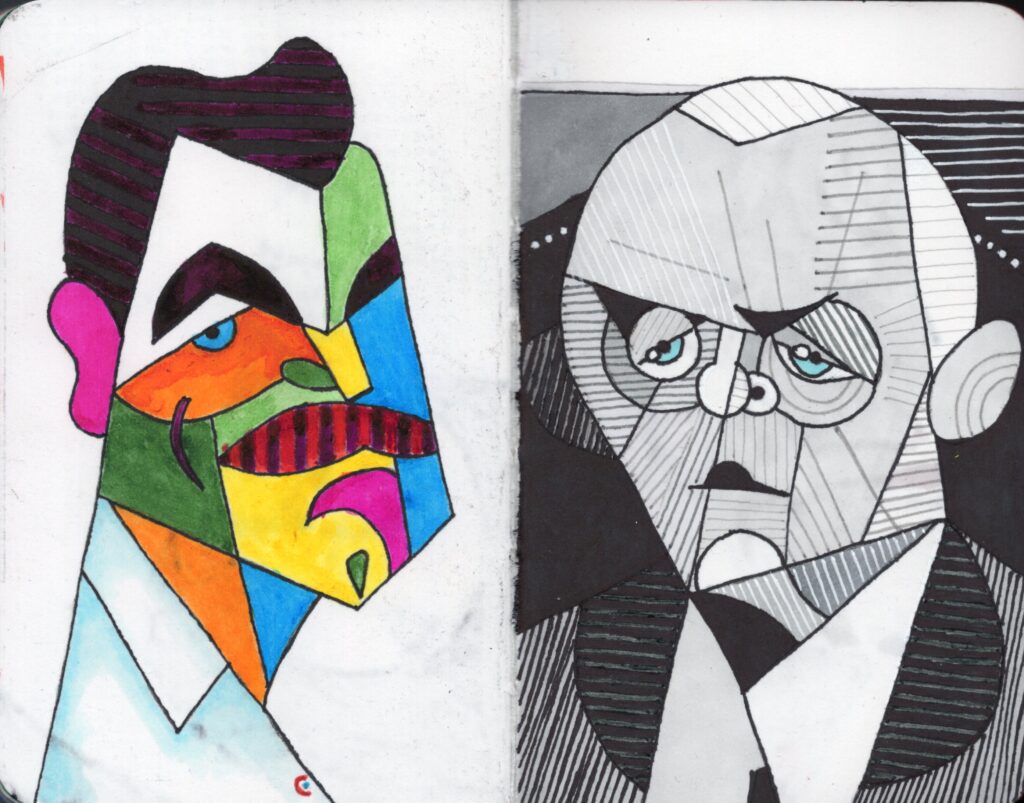
The Tom Selleck and Anthony Hopkins pairing showcases two completely different types of masculine screen presence. For Selleck, the original artist had made his iconic mustache the centerpiece of the design, using warm earth tones and bold lines to capture the rugged charm he brought to “Magnum P.I.” and “Three Men and a Baby.” Reproducing the precise balance of geometric abstraction and recognizable features was particularly satisfying.
The Hopkins illustration I copied employed a cooler, more restrained palette with sharp, analytical angles that perfectly reflected the intellectual precision he brings to roles like Hannibal Lecter in “The Silence of the Lambs.” The original artist had used white space and strategic color placement to suggest the quiet intensity that makes Hopkins so compelling on screen. Copying this controlled, precise style was a wonderful contrast to the warmer, more expansive approach of the Selleck portrait.
Reflections on Completion
Finishing the final portrait (Michael Caine) brought a satisfying sense of accomplishment. This tiny sketchbook had become such an integral part of my daily routine—copying designs during lunch breaks, matching colors while watching classic films, refining details during my morning coffee.
Looking back through the completed collection, I’m struck by how much joy can come from the simple act of reproduction. There was no pressure to be original—just the pure pleasure of seeing these dynamic interpretations take form under my hand. The project became less about creating something new and more about connecting with cinema history through the artistic visions of others.
The sketchbook now sits on my shelf, a tiny rainbow-colored collection of borrowed creativity. More importantly, it represents hours of peaceful focus and the simple pleasure of making something beautiful, even if the designs themselves weren’t originally mine.
What iconic star interpretations will find their way into my sketchbook next? The Pinterest boards I’ve been saving are already full of inspiration for the new volume…