
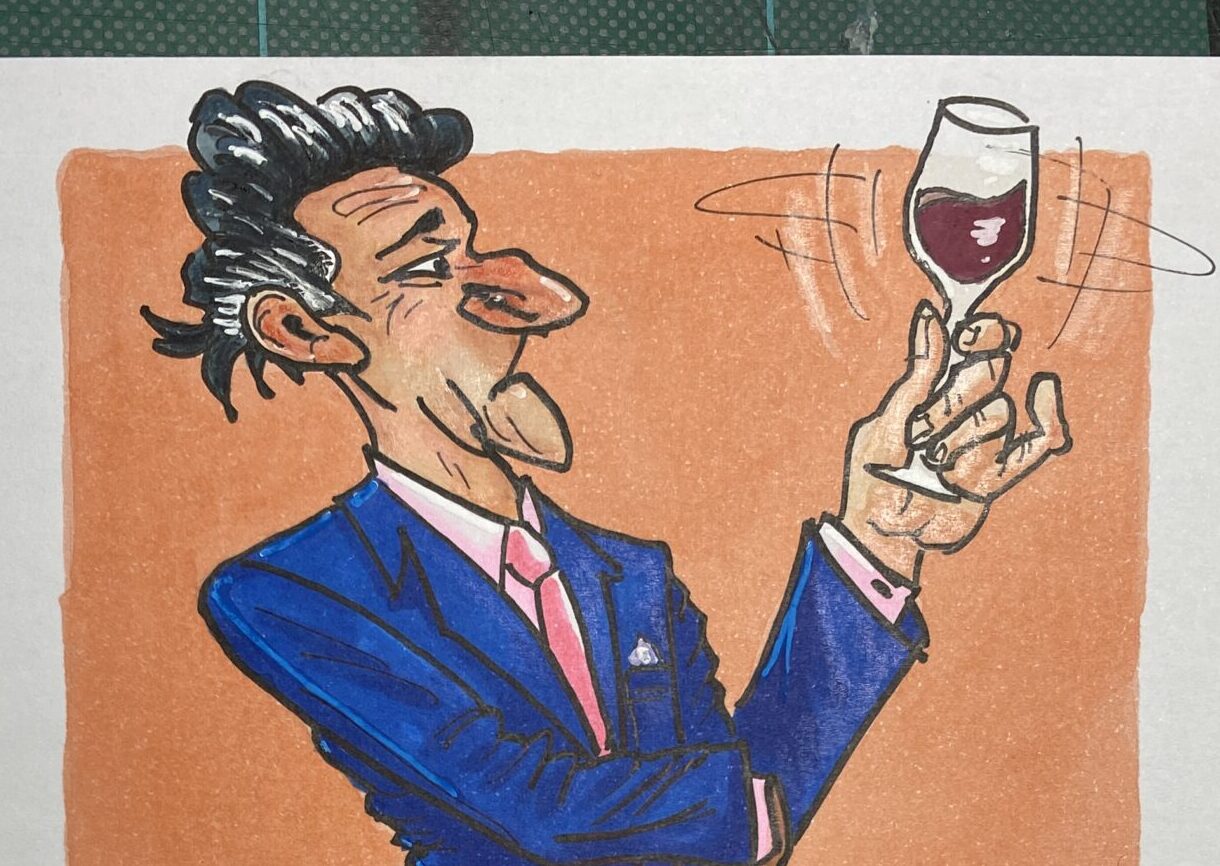
A Journey in Lines and Colors: The Making of The Sommellier
Inspiration strikes in the most unexpected ways, and for this particular piece, it came from the work of renowned animator Aaron Blaise. Known for his dynamic and expressive character designs, Blaise’s sketches are a treasure trove for anyone looking to hone their artistic skills. For me, this drawing was an opportunity to learn, experiment, and breathe life into a borrowed sketch with my own creative touch.
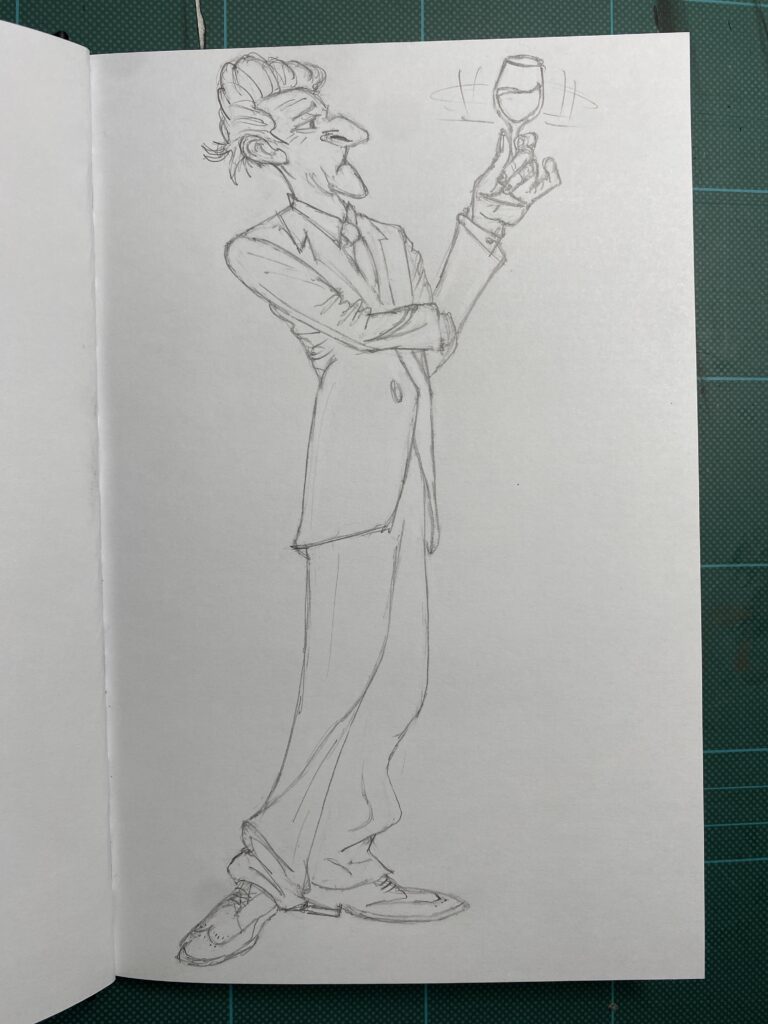
Step 1: Laying the Foundation with Pencil
Every masterpiece begins with a humble pencil, and this piece was no exception. I started by tracing the sketch from Blaise’s original work, carefully studying the proportions, angles, and flow of the lines. Tracing, for me, wasn’t just about copying—it was about understanding the structure beneath the surface. The way the figure tilted slightly forward, the playful exaggeration of features, and the casual confidence in the pose all spoke to me. Each pencil stroke was deliberate, as I aimed to replicate the essence of the character while adding my own subtle interpretation.
Step 2: Refining with Fineliner
With the pencil framework complete, it was time to bring clarity and definition. Using a fine-tipped fineliner, I meticulously traced over the pencil lines, adding depth and weight where needed. This stage was where the character truly began to come alive. The smooth curves of the suit, the sharp angles of the nose, and the expressive hand holding the glass of wine—all of these details took on a sharper, more confident presence under the fineliner.
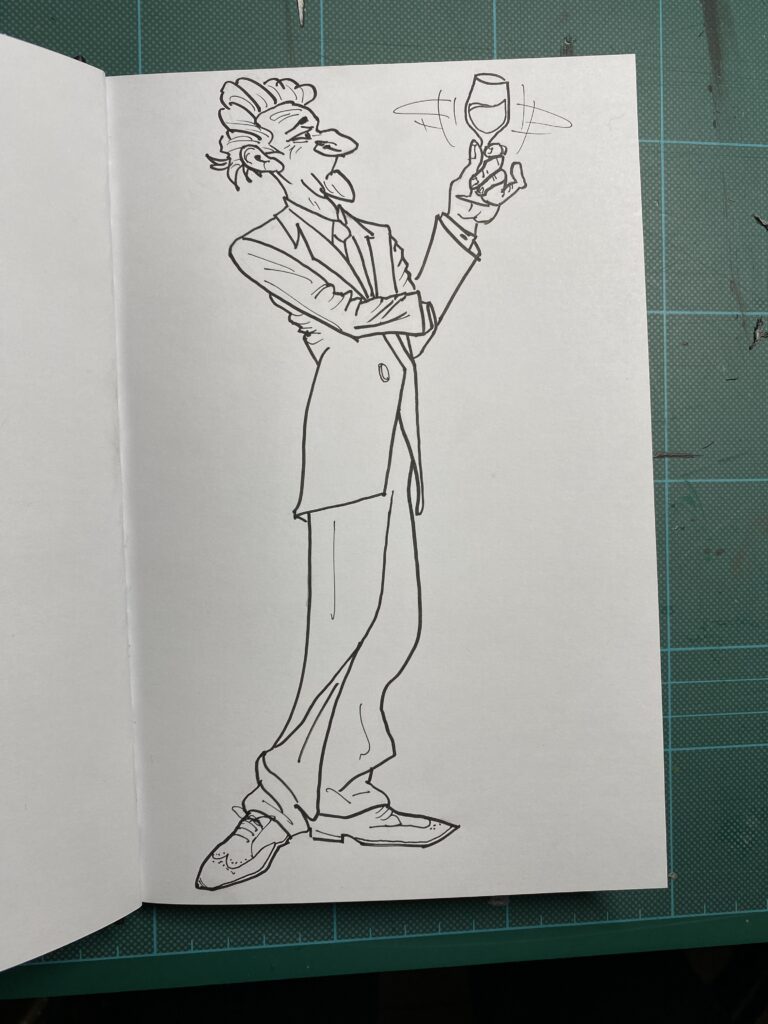
This stage was also an exercise in restraint. It’s easy to get carried away with details, but I wanted the lines to feel deliberate and balanced. The fineliner forced me to commit to every decision—no erasers allowed! This commitment, though nerve-wracking, added a sense of permanence and purpose to the artwork.
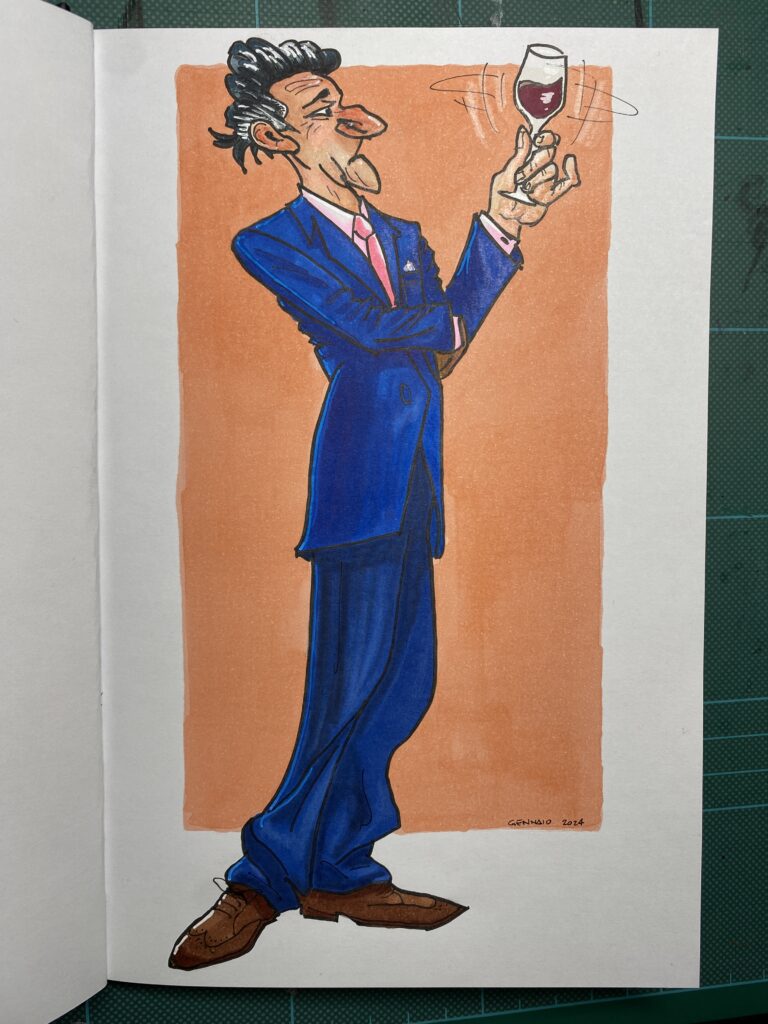
Step 3: Breathing Life with Color
Coloring is where the magic happens. For this piece, I chose alcohol markers for their vibrant hues and smooth blending capabilities. I wanted the colors to feel rich and lively, complementing the character’s dynamic pose and playful expression.
- The Suit: A deep blue was the obvious choice to convey sophistication and confidence. Layering the markers allowed me to create subtle shadows, giving the suit dimension and a sense of movement.
- The Background: An orange backdrop provided the perfect contrast to the blue suit, making the character pop. The warm tone added a sense of warmth and elegance, almost as if the character were standing in a softly lit lounge.
- Skin and Features: Neutral tones for the skin and carefully placed highlights brought out the personality in the face. The exaggerated nose, the raised eyebrow, and the ever-so-slight smirk all hinted at a story—one of charm, wit, and a love for fine wine.
- The Glass of Wine: The wine itself was a small but significant detail. A rich red brought a touch of luxury and refinement, while the shimmering light reflected in the glass added a hint of movement and life.
Reflections on the Process
Creating this piece was as much about learning as it was about creating. Tracing Blaise’s work allowed me to step into the mind of a master animator, studying how he constructs characters that feel alive and full of personality. Adding my own colors and details was my way of paying homage to his work while exploring my own style.
The entire process, from pencil sketch to final color, was deeply satisfying. It reminded me of the joy of artistic exploration—the balance between learning from others and finding your own voice. As I looked at the final piece, I felt a sense of accomplishment not just for the finished product but for the journey it represented.
If you’ve ever thought about using a master’s work as a starting point for your own creative endeavors, I wholeheartedly recommend it. It’s an incredible way to grow as an artist and deepen your appreciation for the craft. And who knows? You might just end up with a piece you’re proud to call your own.